

If you’ve ever stood in the car seat aisle scratching your head over ‘Group 1’ versus ‘i-Size’ versus ’40-105cm’, you’re in good company: it confuses most parents, and for good reason. The rules changed a few years back, and there are now two different systems running side by side on shop shelves. So how do you actually know when your angel is ready to move on from their current seat? Let’s untangle it.
Groups vs i-Size: Why the Confusion?
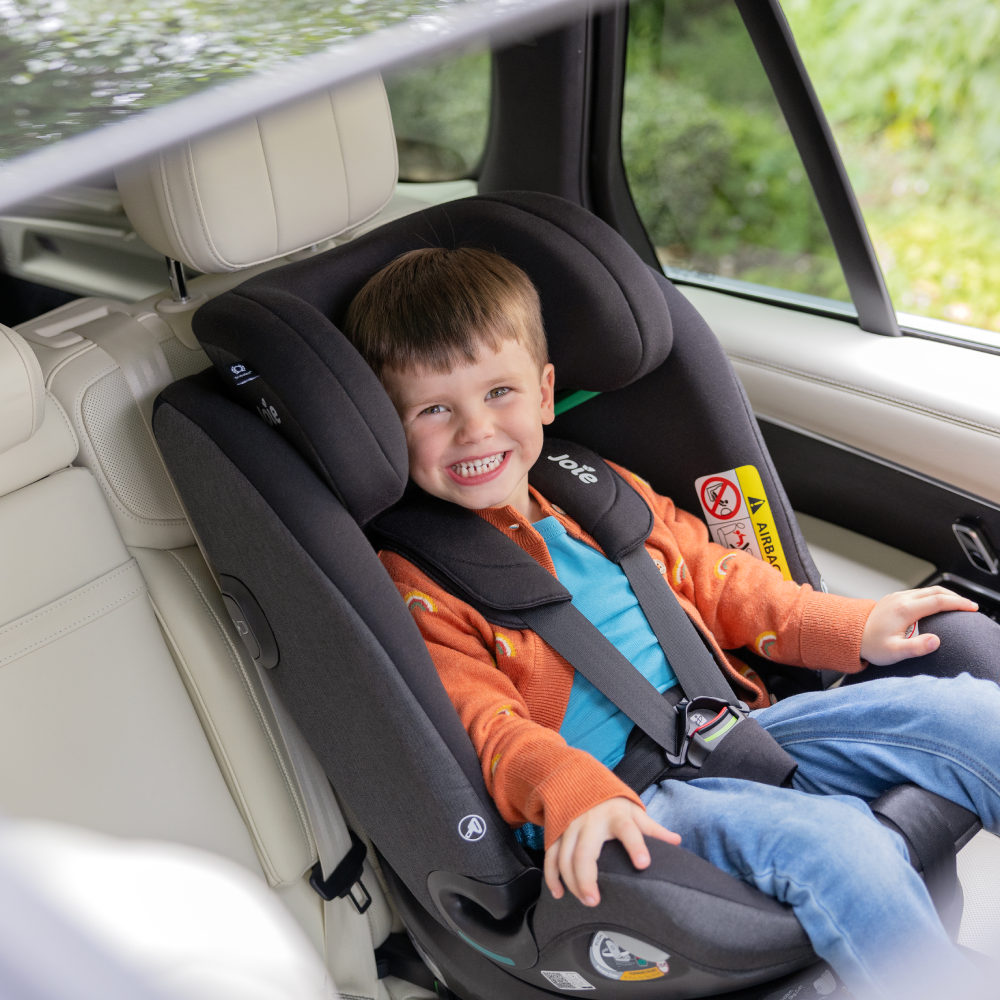 The older system splits seats into weight-based ‘groups’: Group 0 and 0+ for the smallest babies, Group 1 for toddlers from around 9kg, and Groups 2 and 3 for older children. It’s been around for decades and plenty of perfectly good seats still use it. The newer system, i-Size (also called R129), is based on your child’s height rather than weight, and it adds one crucial extra rule: babies must remain rear-facing until at least 15 months old, regardless of how big they seem. Both systems are legally sold in the UK right now, which is exactly why the labelling can feel like a foreign language.
The Legal Bit: Rear-Facing Until 15 Months
Under i-Size regulations, it’s a legal requirement to keep your baby rear-facing in their seat until they turn at least 15 months old. You can read the full detail on the GOV.UK child car seat rules page. Beyond that age, the general safety advice (including from RoSPA’s car seat guidance) is still to keep your little one rearward-facing for as long as their seat allows, since it offers better protection for the head, neck and spine in a crash. More broadly, GOV.UK also confirms that children must use an appropriate car seat until they’re 135cm tall or turn 12, whichever comes first; after that, an adult seatbelt is sufficient.
Practical Signs Your Seat Has Been Outgrown
Numbers on a label are useful, but your tot will usually give you a few physical clues too. Look out for:
- Your little one’s head is level with, or above, the top of the seat shell.
- Their shoulders sit above the top harness slots, even at the highest adjustment setting.
- The seat’s maximum height or weight limit, printed on the label, has been reached.
- You can no longer fit two fingers between the harness strap and their collarbone once it’s tightened.
A quick note on legs: if your rearward-facing kiddo’s legs look a bit cramped or crossed against the back seat, that’s not on its own a reason to turn them forward-facing early. Most babies and toddlers find this perfectly comfortable, and it’s the head, shoulder and harness position that actually matter for safety, not leg room.
Moving From an Infant Carrier to a Toddler Seat
If you started out with a Group 0+ infant carrier, (the kind that clips onto a pushchair chassis) the first big transition is usually into a Group 1 or i-Size toddler seat, typically somewhere between 12 and 18 months depending on your child’s growth rather than a fixed birthday. Infant carriers are generally rated up to around 13kg, so once your little one is approaching that weight, or their head is nearing the top of the shell, it’s worth measuring up for the next stage rather than waiting for the carrier to become unusable overnight. The good news is that an infant carrier reaching its limit doesn’t mean you’re behind schedule: babies grow at wildly different rates, and a seat that lasts 10 months for one family might comfortably last 16 for another.
Why Moving On Too Early Is Riskier Than Moving On Late
It can feel like turning a car seat forward-facing is a milestone worth celebrating, but from a safety standpoint, later is genuinely better than early. A baby’s head accounts for roughly a quarter of their total body weight in the first year, far more proportionally than an adult’s, while their neck muscles and spine are still developing the strength to control it. In a frontal collision, a rear-facing seat spreads the force of impact across the back of the seat shell, cradling the head, neck and spine together, whereas a forward-facing child’s head is thrown forward with much less support. This is exactly why i-Size made rearward-facing to 15 months a legal minimum rather than a suggestion, and why RoSPA and most seat manufacturers actively recommend staying rear-facing well beyond that minimum wherever the seat allows it.
Double-Checking a Newly Fitted Seat
Every time you move up a stage, it’s worth running through a quick fitting check rather than assuming everything’s correct just because the seat clicked into place:
- With ISOFIX seats, confirm both connectors show a green indicator, not just a click you heard.
- Make sure the support leg is fully extended and making firm contact with the vehicle floor, not resting at an angle.
- Recheck the harness height slot: it should sit at or just above shoulder height when rearward-facing, and at or just below when forward-facing.
- Give the seat a firm wiggle test at the belt or ISOFIX points; there should be minimal movement side to side or front to back.
- If you’re at all unsure, many retailers and some fire stations offer a free car seat fitting check; it’s worth taking advantage of one after any change of stage.
The All-Stage Solution: One Seat, Multiple Stages
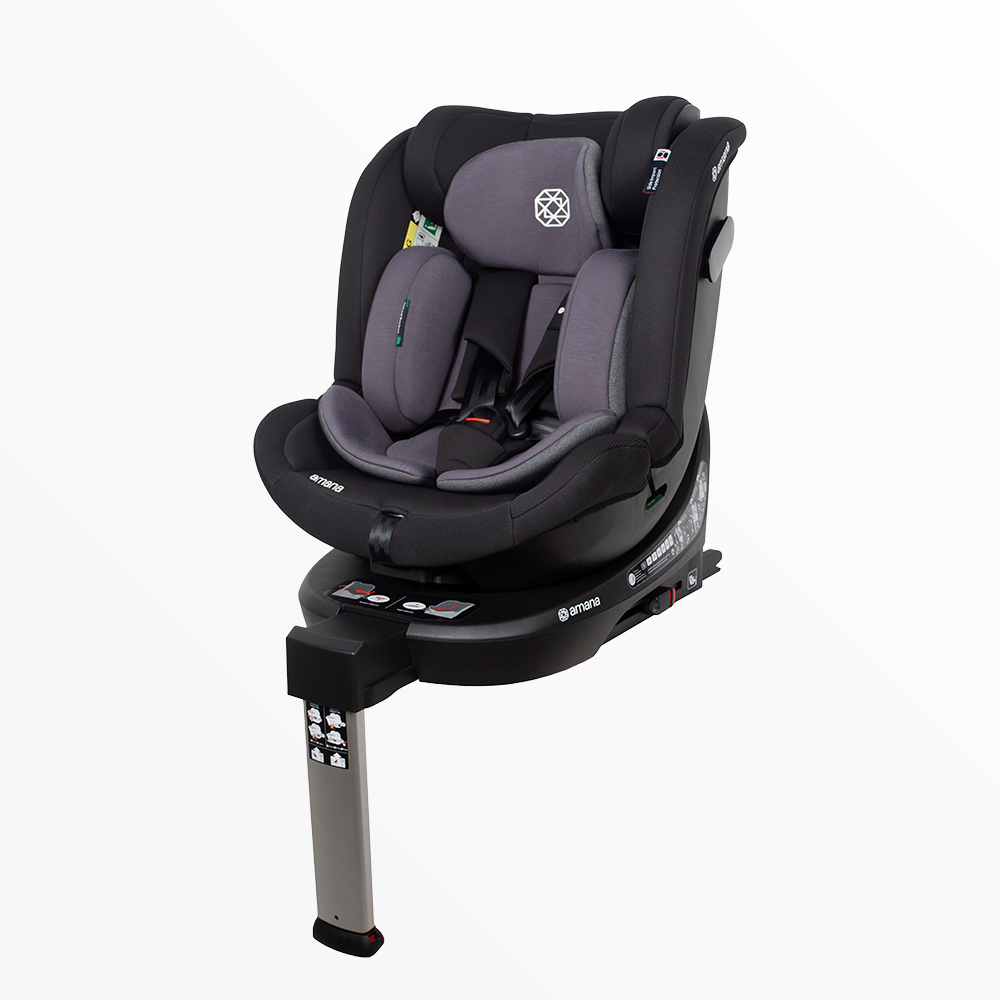
One way to sidestep this whole guessing game is to buy a seat that’s designed to grow with your child from the outset. The Amana Siena Twist and Amana Siena Twist+ 360 Spin are both Group 0+/1/2/3, all-stage, i-Size-approved seats that take your child from birth right through to around 12 years old (40cm-135cm) in the same seat. Instead of researching, budgeting for, and fitting a brand-new seat every 18 months or so, the seat itself adjusts: recline position, harness height, and eventually a stowable harness that converts it into a booster. The Twist+ adds 360° rotation on top, so loading a wriggling darling in and out is that much easier at every stage.
Safety Tips for the Transition
- Always keep your child rearward-facing for as long as the seat allows: the longer they stay rearward, the better protected they are in a front or side collision.
- Recheck the harness height and recline position every few months, not just when you spot a problem.
- Watch the manufacturer’s fitting guide (or have it professionally checked) before your first drive in a new position.
- Don’t rush the switch to forward-facing just because a sibling or a friend’s baby has already moved on: height, weight and age limits should decide it, not comparisons.
FAQs
 Can I turn my baby forward-facing before 15 months if they seem too big for their seat?
Under i-Size rules, babies must stay rear-facing until at least 15 months old regardless of size: this is a legal requirement, not just a recommendation (see the GOV.UK guidance). If the seat feels tight before then, check the recline angle and harness adjustment before assuming they’ve outgrown it.
What’s actually different about an i-Size Group 1 seat compared to an older Group 1 seat?
The older group system is based purely on weight, starting from around 9kg for Group 1. i-Size seats are based on height and add the mandatory rear-facing-to-15-months rule, plus crash testing that specifically includes side-impact protection, and generally offers a more rounded level of protection.
Do all-stage car seats compromise on safety compared with single-stage seats?
Not if they’re approved to i-Size/R129 with proper ISOFIX and side protection. The Amana Siena Twist+, for example, is approved to the same current standard and includes ISOFIX with a support leg and a Side Impact Protection System, just like many single-stage seats.
How do I know exactly when to move my child up a stage in an all-stage seat?
Check the height and weight markers printed on the seat itself against your child’s growth. With an all-stage seat like the Siena Twist+, the seat adjusts around your child: recline, harness height, and eventually the booster conversion, so there’s no separate seat to buy or fit at each milestone.
Can I buy a secondhand car seat to save money on the transition?
It’s generally not recommended unless you know the seat’s full history. A car seat that’s been in even a minor collision can have hidden structural damage that isn’t visible from the outside, and older secondhand seats may not meet current i-Size standards or come with missing instructions and fittings. If budget is a concern, it’s worth looking at sales or bundle deals on new, currently-approved seats rather than risking an unknown history.
Wrapping Up
Car seat labelling might be confusing, but the underlying advice is simple: stay rearward-facing as long as you legally and practically can, watch for the physical signs your seat’s been outgrown rather than relying on birthdays, and consider an all-stage i-Size car seat if you’d rather buy once and adjust as your little one grows.