
Seen the term ‘compact stroller’ popping up everywhere and wondered whether it’s just marketing speak for a smaller pushchair? Sort of, but there’s more to it than size alone. Here’s what a compact stroller actually is, who it suits, and whether it’s worth adding to your kit alongside (or instead of) a full-size pushchair.
Compact Stroller vs Full-Size Pushchair
A full-size pushchair is usually built to go the distance: bigger wheels, a larger seat, more storage, and often a lie-flat recline or carrycot option for newborns. A compact stroller, on the other hand, is designed first and foremost to be small and light. It’ll typically fold down tiny (often with a built-in carry handle so you can sling it over a shoulder), weigh a fraction of a full-size pushchair, and prioritise portability over the bells and whistles. What you generally lose is a true lie-flat position for newborns, since compact strollers are built more with sitting toddlers in mind.
Who Is a Compact Stroller Actually For?
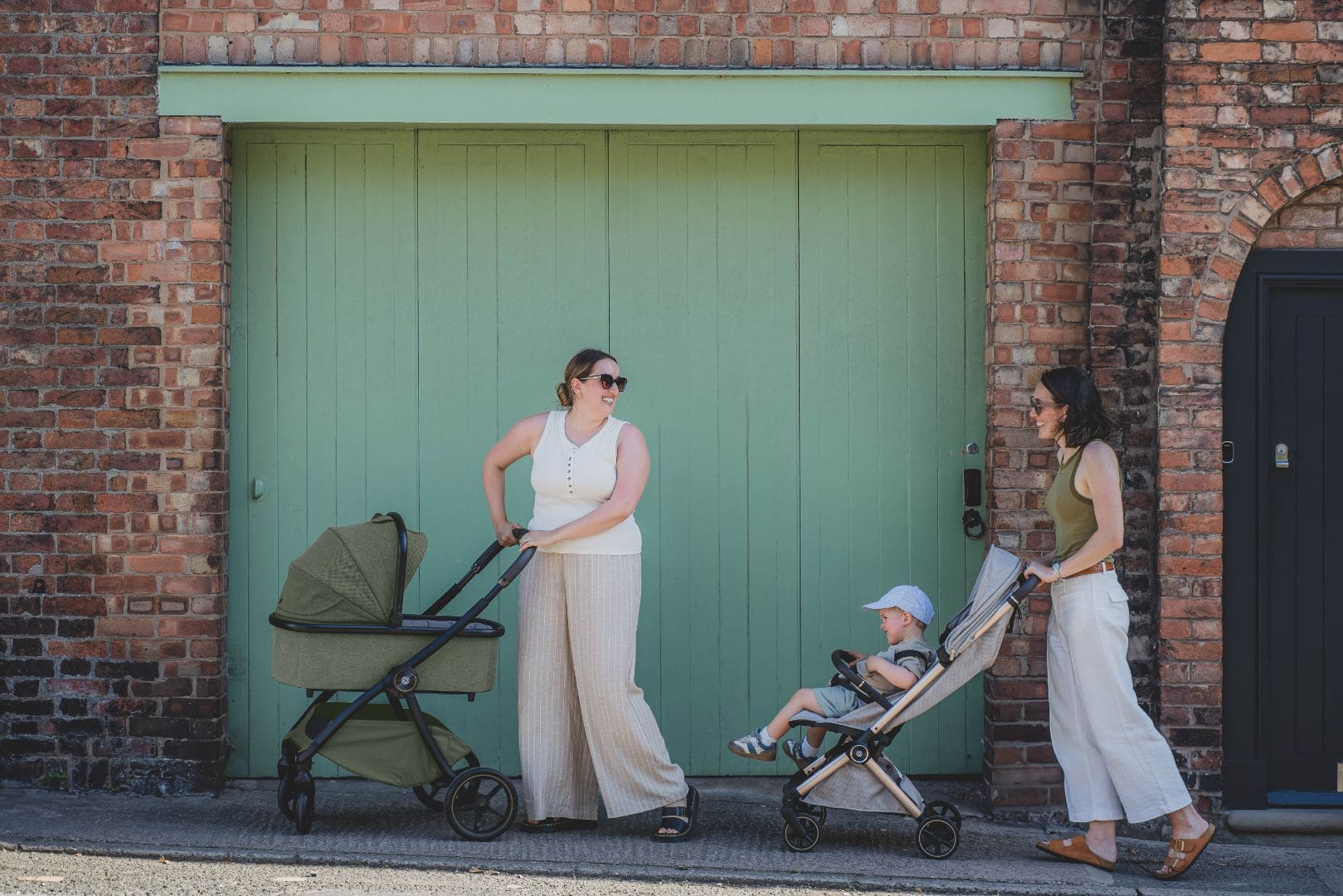 A compact stroller tends to earn its keep in a few specific situations:
- As a second buggy kept at grandparents’ house, so there’s no need to lug the main pushchair back and forth.
- For city living, where narrow shop doorways, buses and lifts make a bulky pushchair a genuine hassle.
- For travel and holidays, where a lightweight fold that fits in an overhead locker or small car boot is a lifesaver.
- From around 6 months onwards, once your little one can sit supported. Most compact strollers aren’t designed as a lie-flat newborn replacement, so they’re better suited to an older bub than a brand-new one.
What to Check Before You Buy
- The folded dimensions: will it actually fit in your car boot, hallway, or under a train seat?
- The overall weight: this is often the entire point of a compact stroller, so don’t skip checking it.
- Whether the seat reclines, and how far: useful for naps even if it’s not a full flat recline.
- Car seat compatibility via adapters, if you’d like to use it as part of a travel system with an infant car seat you already own.
- The age and weight limit, so you know how long it’ll realistically last before your kiddo outgrows it.
Can You Take a Compact Stroller on a Plane?
One of the biggest draws of a compact stroller is holiday travel, and most airlines are fairly accommodating when it comes to buggies: many let you take a folded stroller right up to the aircraft door free of charge, where it’s then stowed in the hold and handed back to you on the jet bridge at your destination, rather than waiting at baggage reclaim. That said, policies vary noticeably between airlines and even between aircraft types, and weight or size limits do sometimes apply for cabin storage specifically, so it’s always worth checking your airline’s current buggy policy before you fly rather than assuming it’ll be identical to your last trip. A stroller that folds down small and light, like the Amana Luxo at 6.9kg, tends to make the whole airport experience noticeably less stressful, from security queues to narrow jet bridges, than wrestling a full-size pushchair through the same spaces.
Pros and Cons vs a Full Travel System
The obvious upside of a compact stroller is convenience: lighter to carry, quicker to fold, easier to store, and usually cheaper too. The trade-off is that you typically lose the from-birth lie-flat option, a larger storage basket, and some of the plusher ride comfort you’d get from a full-size pushchair or travel system. For a lot of families, the sensible answer isn’t choosing one over the other, but using a full travel system for the early months and a compact stroller once baby’s sitting up and you fancy travelling lighter.
Spotlight: The Amana Luxo Compact Stroller
The Amana Luxo 4 Piece Compact Stroller (£225, RRP £399) is a genuinely lightweight option at just 6.9kg, and it folds down to a neat H55 x W25 x L46cm with a built-in carry handle, so it’s easy to tuck into a car boot or hallway cupboard. It’s suitable up to 22kg, roughly around 4 years old, and features a reclining seat with ventilation panels, an extendable canopy, an adjustable footrest, and a secure 5-point-style harness, plus a rear wheel brake and an under-seat storage basket for the essentials. It comes as a genuine 4-piece bundle too, including a rain cover, a travel backpack, and a cup holder.
If you’d like to use it as part of a travel system, the Luxo is compatible via adapter with several popular infant car seats, including the Joie I-Snug 2, Avionaut Pixel Pro 2.0c, Cybex Aton B2 i-Size, and Maxi-Cosi Pebble 360 Pro2 i-Size. For a ready-made bundle with the adapters included, there’s also the Amana Luxo Compact Travel System Bundle (£299, RRP £439).
FAQs
 Can I use a compact stroller from birth?
Generally, no. Most compact strollers, including the Amana Luxo, don’t offer a full lie-flat recline, so they’re best suited to babies who can sit supported, from around 6 months onwards. For newborns, a carrycot or a full-size pushchair with a proper flat recline is the safer choice for sleep.
Is a compact stroller strong enough for everyday use, or just occasional trips?
Plenty of families use a compact stroller as their main buggy once baby is past the newborn stage, particularly in cities or for regular travel. It’s really down to your lifestyle: if you need a lie-flat option or heavy-duty off-road wheels day to day, a full-size pushchair may suit better, but for pavements and general outings a compact stroller like the Luxo holds up well.
Can I attach my existing infant car seat to a compact stroller?
It depends on the model and the adapters available. The Amana Luxo, for example, is compatible via adapter with the Joie I-Snug 2, Avionaut Pixel Pro 2.0c, Cybex Aton B2 i-Size, and Maxi-Cosi Pebble 360 Pro2 i-Size. Always check compatibility with your specific car seat before buying.
What’s the difference between the Luxo Compact Stroller and the Luxo Travel System Bundle?
The 4 Piece Compact Stroller is the stroller itself plus a rain cover, travel backpack and cup holder. The Compact Travel System Bundle includes the same stroller along with the car seat adapters, ready to pair with a compatible infant car seat for a full travel system set-up.
Can I take a compact stroller as hand luggage, or does it have to go in the hold?
Most compact strollers, including the Luxo, are still gate-checked rather than carried into the cabin, though you can typically keep it with you right up until you board, with cabin crew or ground staff storing it for the flight. That said, cabin-approved strollers are a genuine and increasingly popular category in their own right, built to meet a specific airline’s hand luggage size limits so they can travel in the cabin with you rather than the hold. Availability and rules vary a lot by airline and even by aircraft type, so if flying with hand luggage only is a priority for you, look specifically for a stroller marketed as cabin-approved and always confirm the current policy with your airline before you travel.
Will a compact stroller cope with cobbled streets or uneven pavements?
Reasonably well for occasional use, though smaller wheels mean a slightly bumpier ride than a full-size pushchair with larger, air-filled tyres. For mostly flat pavements, shopping centres and airports, a compact stroller like the Luxo holds up fine. It’s just not the first choice if you’re regularly tackling gravel paths, cobbles or rougher terrain day to day.
Is It Worth It?
If your days involve buses, lifts, small car boots, or a second set of grandparents’ hands, a compact stroller earns its keep fast. Have a browse of the Amana Luxo compact stroller range and see whether it’s the missing piece in your pushchair set-up.