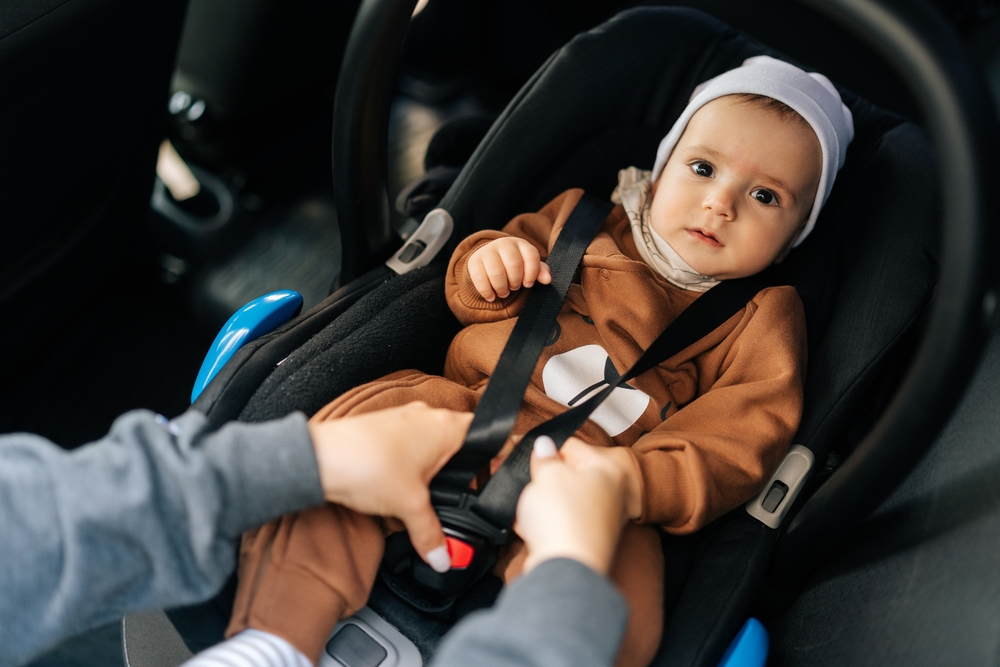
If you’re a parent on the go, you’ll be sharing lots of car trips with your teeny tot. Car journeys are an important part of our day-to-day life, and car seats are an essential safety precaution for little ones. Whether it’s a quick drive to lull your angel to sleep or a full-blown road trip, our expert advice ensures they’re safe on the road.
The most important thing to remember is, by UK law, all children must use car seats until they’re 135 cm tall or until the age of 12 (whichever comes first). And remember – your little one’s car seat should be rear-facing until they’re at least 15 months old. This is all down to seat belt placement, and if it’s not in the right position, your cheeky monkey could slip out.
So, how can you keep your bundle of joy protected on your travels? In this post, we provide information on how to keep them safe in a car.
Your first car journey with a baby
The first car journey with a newborn can be a frightening experience. You are just coming to terms with parenthood, sleepless nights and the various colours of baby poo when you have to bundle your precious baby into their car seat and take them on their first journey. Whether it’s taking your little one home from the hospital, or popping into your local shops, try to make your first trip as stress-free as possible with our top safety tips.
Choosing a car seat
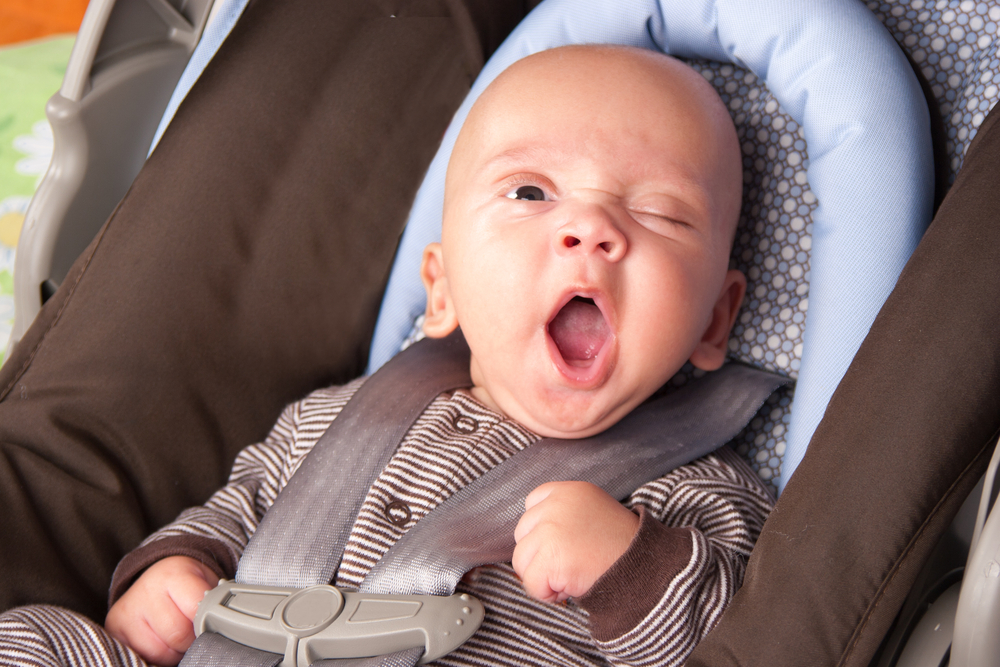
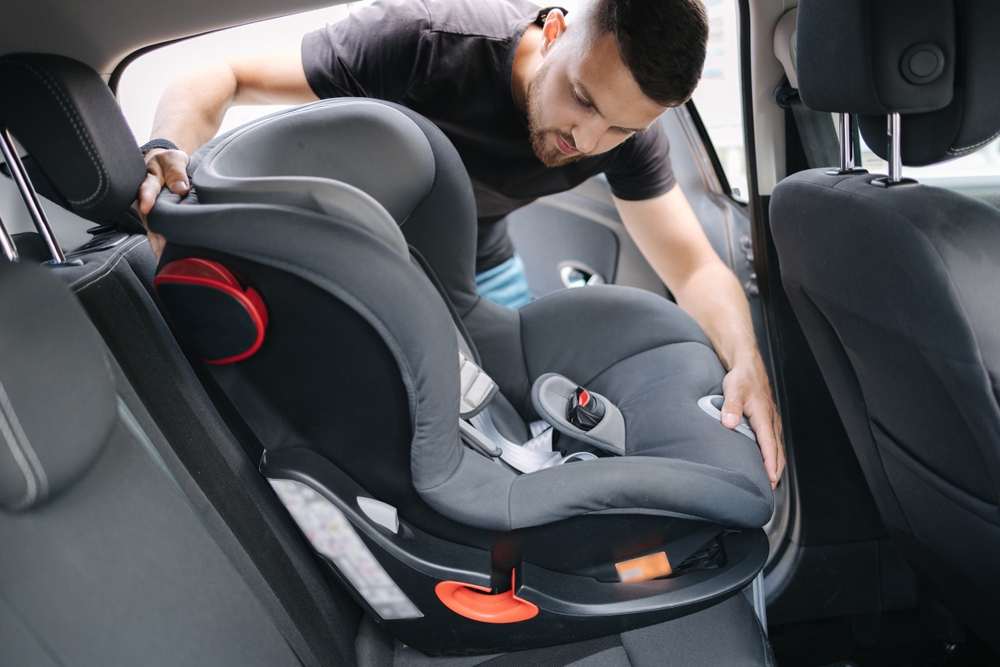
Absolutely top of the list is ensuring that you are using the correct car seat for your little one (if you are unsure, look at the chart below) and installing it correctly. Follow the instructions closely, making sure the car straps are placed correctly and tightly. You may want to have a few practices before the journey; adding a screaming baby into the mix on your first attempt may be too ambitious.
A car seat with an ISOFIX base also makes this process a bit easier and less back-breaking! An ISOFIX base uses ISOFIX connectors that secure the base to your vehicle. The car seat then sits on top of the base in one click and makes sure it is secure. Most vehicles are equipped with ISOFIX points. To check, look for the indicators on the back seat of your car or in your vehicle handbook.
Legally, the group 0+/1 seats (the correct group for a newborn) must face the rear of the car, and if you place the seat in the front passenger seat, you must disable the airbags. It’s also essential that you buy the right one to meet car seat laws. There are two different standards to look out for, ECE R44 and UN R129 (also known as i-Size).
A guide to car seat groups and regulations
We know car seat groups can be confusing, so here is a table to show you the weight range and approximate age for the car seat groups. We have also provided information on what the difference is between R44 and R129 regulation car seats.
Seat group |
Weight range |
Approximate age range |
|
Group 0+/1 |
0-18kg (0-40lb) |
From birth to 4 and a half years |
|
Group 1 |
9-18kg (20-40lb) |
About 9 months to 4 and a half years |
|
Group 2/3 |
15-36kg (33lb-5st 9lb) |
About 3 years to 12 years |
R44 v R129
The R129 standard was introduced in 2012 to make travel for babies and children even safer. It’s. It follows more detailed testing than R44 for improved head and neck protection. Current child car seat laws mean using either regulation car seat is legal. It is still safe to use an R44 car seat, but it is likely that this standard will be phased out over time for the R129.
Here is a breakdown of the main differences:
R129
- choose the seat depending on your child’s height, not weight, so you will find it easier to ensure your child is in the right seat. it has improved safety standards
- you have to use ISOFIX with these car seats to secure it to your vehicle
- your child stays rear-facing until at least 15 months old
We’ll let you in on a little secret – your little one’s height can actually be worked out using their clothes. Labels always have height details on them, so that’s one less job for parents to worry about!
R44
- R44 car seat groups are based on weight, not height
- Models can be fitted either with or without ISOFIX, depending on the model
- These car seats meet R44 standard testing for rear and frontal impact but not for side impact crashes
- Your child can travel forward facing after 9 months.
Who’s Driving?
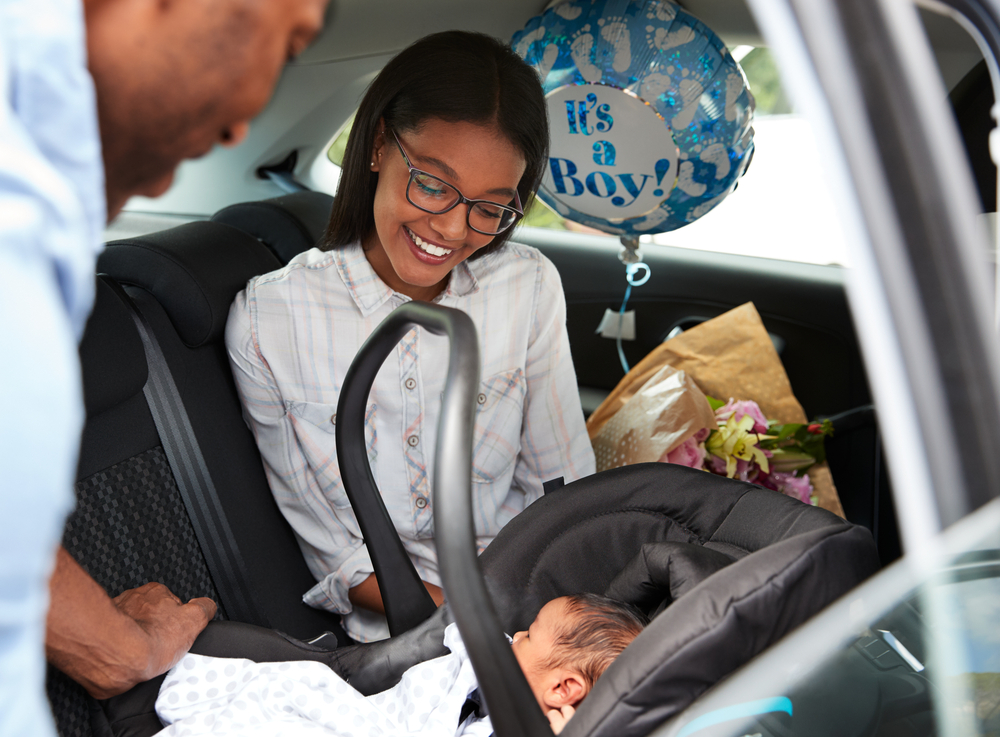
Please remember that on your first car journey, you or your partner may have given birth very recently. If possible, the non-recently birthed person should drive, but if there is no choice, then make sure you/they are rested (as much as one can be with a newborn), relaxed and not on any strong medication that can make driving dangerous.
It’s always best to ask your doctor if it is safe for you to drive, as some new mothers can’t drive after having certain types of childbirth, such as a cesarean section.
Prepare your newborn
If your baby is crying in the car, this may affect your ability to drive calmly and safely. Before you head off, ensure your baby is fed, nappy changed, and they are wearing appropriate clothing for the journey – this will limit the chance of them crying. Try to make sure they’re not too hot or too cold.
Obviously, newborns sometimes just cry for no discernible reason, and if this happens while driving, stay calm and focused and find somewhere safe to stop and soothe your baby. When you and your baby are ready, start your journey again. It’s better to be safe than sorry, and there’s no rush- you’re allowed to be late with a newborn!
Strap them in
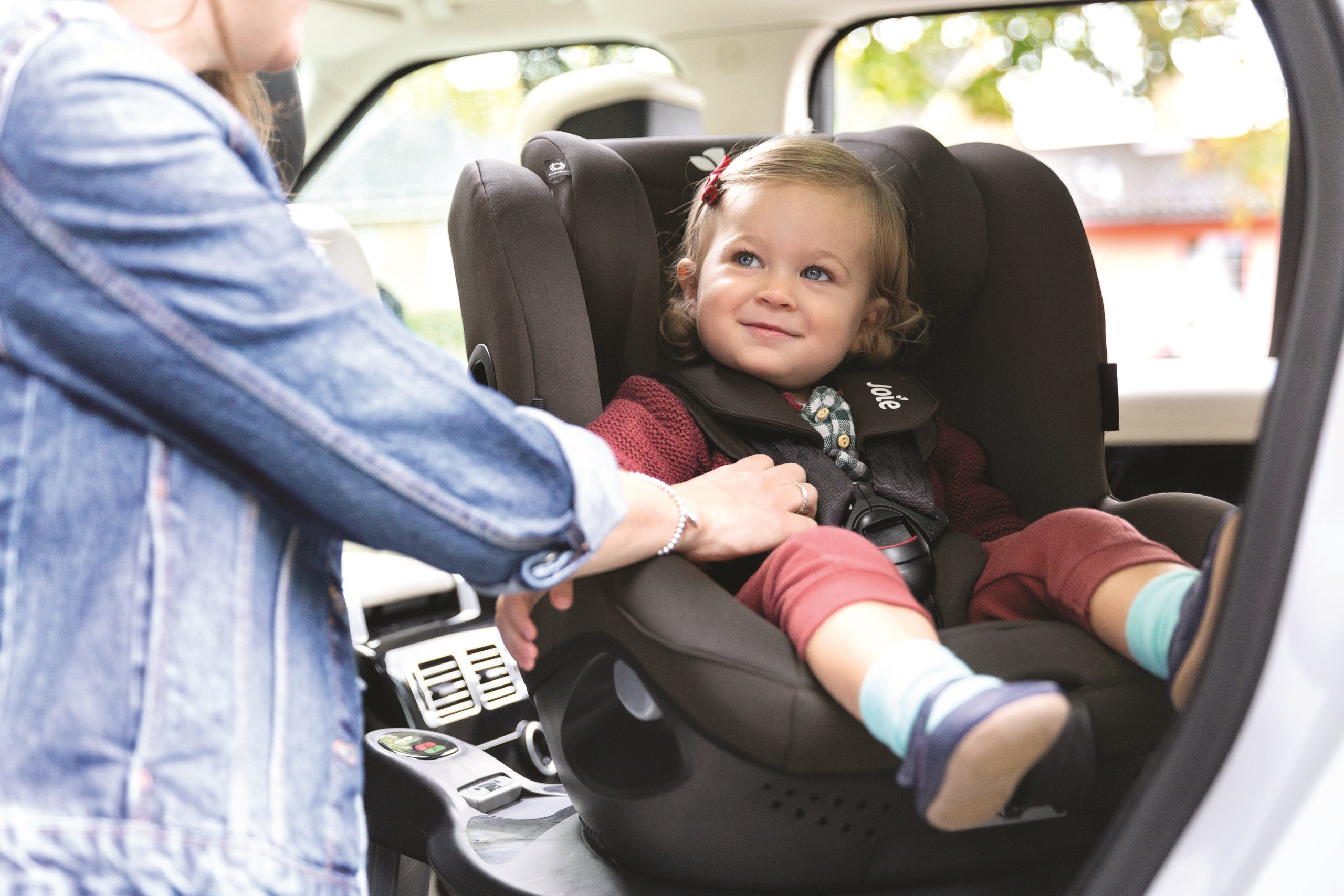
Sounds simple enough, but it is amazing what little sleep and a newborn baby bubble can do to your brain. Before you put your baby in the car, remove any bulky cardigans or coats. Place them in the car seat, strap them in and pull the seat belt as tight as it will go.
If you’re feeling underconfident as it’s the first time you’ve strapped a newborn into their car seat, take it to the hospital with you, birth centre, or wherever you plan on giving birth and ask your midwife to show you.
Can you see them?
If you are driving alone, it can be very disconcerting not being able to see your little one, especially if they are abnormally quiet. Buy a car seat mirror, which attaches in front of your baby’s face, so you can see their reflection and check they are okay. You will be far more relaxed whilst driving if you can see them and check they’re okay.
Frequently asked car seat safety questions
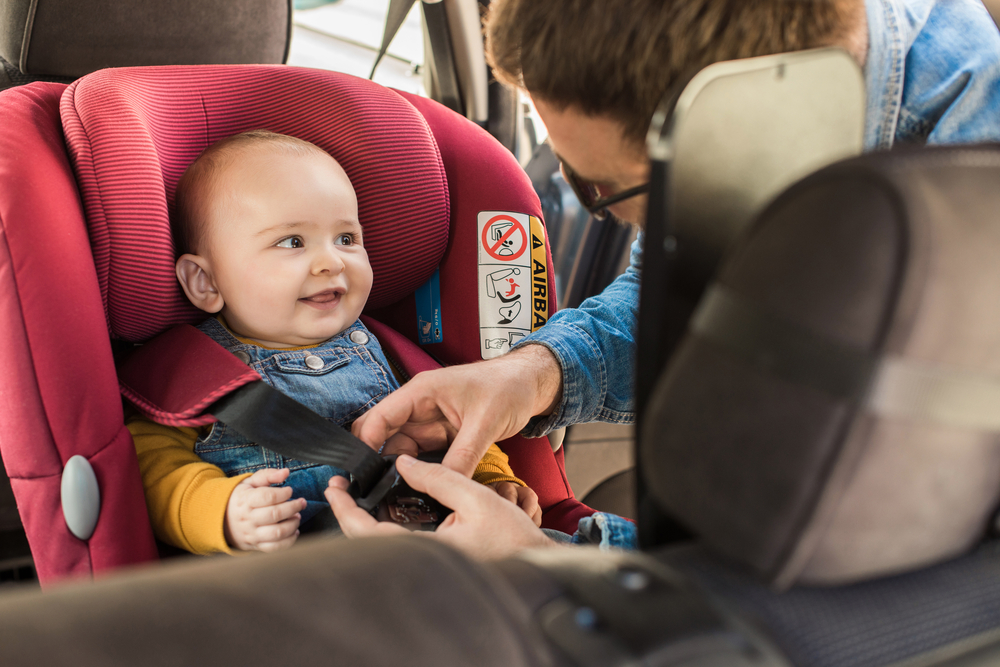
In this section, we’ll answer some frequently asked car seat safety questions. They’re probably questions that you’ve been asking yourself but can’t seem to find a clear answer. Here we’ve put everything in one place so you can learn everything there is to know about keeping your little one safe in a car seat.
How long can a baby be in a car seat?
The Lullaby Trust study and the NHS Foundation Trust and University of Southampton, advise against long periods of time spent in a car seat. There are different lengths of time advised, such as: from when they’re a newborn to 3 months old, no more than 30 minutes should be spent in a car seat, or until they can lift their own heads, or the recommended length for babies and infants is no longer than 2 hours.
Therefore, our experts at Kiddies Kingdom, suggest keeping it to 90 minutes where possible, with regular breaks. If you’re planning a road trip with your little explorer, you should pull over every so often and take them out of their car seat.
Just as it is for adults, being cooped up in the same position can get tiring, so a little wriggle about is a must! Of course, driving safely is a given; however, it’s also important to keep an eye on your baby. We recommend having two adults where possible if you know your journey is going to be long. The more the merrier, and it’ll mean more eyes on your munchkin!
Which way should be baby be facing?
A newborn’s car seat should ideally be secured in the back of the car, and it must be rear-facing. It shouldn’t go in the front seat, but where there’s no other choice, move the seat as far back as possible and make sure the airbag is disabled.
Height-based seats are becoming more common compared to ones that go off age/weight. The current guidelines advise that babies stay rear-facing until they weigh 9kg. However, newer i-Size regulations require this until they’re 15 months. Keeping your baby rear-facing for as long as possible is the best option as it is safer than travelling forward facing.
How can I make sure my baby is fitted in their car seat correctly?
- Remove bulky clothing before you buckle your child in. Take off thick winter coats and all-in-one suits, as these can increase the distance between your baby and their harness.
- Only use blankets after your child has been strapped in. If it’s a chilly day or your baby likes the comfort of a blanket, only have it laid across them after buckling in and never underneath or behind the harness.
- Adjust the headrest. Your baby’s ears should be surrounded by the headrest and this will need to be adjusted as they grow.
- Use a newborn insert to make sure your baby is supported in their car seat. Generally, parents use a newborn insert until around 5-6 months old.
- Tighten the straps. It should be quite tight so only 1 or 2 fingers can squeeze underneath the straps.
So there you have it, everything you need to know about keeping your children safe in a car seat, right from the first car journey. By following these steps, you’ll be making sure they’re as safe as they can be in their car seat so you can feel confident and ready to go on adventures to make precious memories with your baby.