

The best baby carriers UK parents actually rate share a handful of traits: newborn suitability (or a proper insert), hip-healthy “M” positioning that keeps knees higher than bum, a wide, supportive base panel, a weight range that will see you through more than a few months, and a buckle-and-strap system you can get on solo with a squirming tot on your hip. Beyond that, it’s really about fit, both yours and theirs. We’ve dug through the current UK market, from the big ergonomic names to the budget-friendly wraps, to put together a proper ranked shortlist rather than a vague “here are some carriers” round-up. Whether you want something for newborn cuddles on the school run or a sturdy backpack-style carrier for muddy toddler walks, there’s a pick below for you.
What Should You Look For in a Baby Carrier?
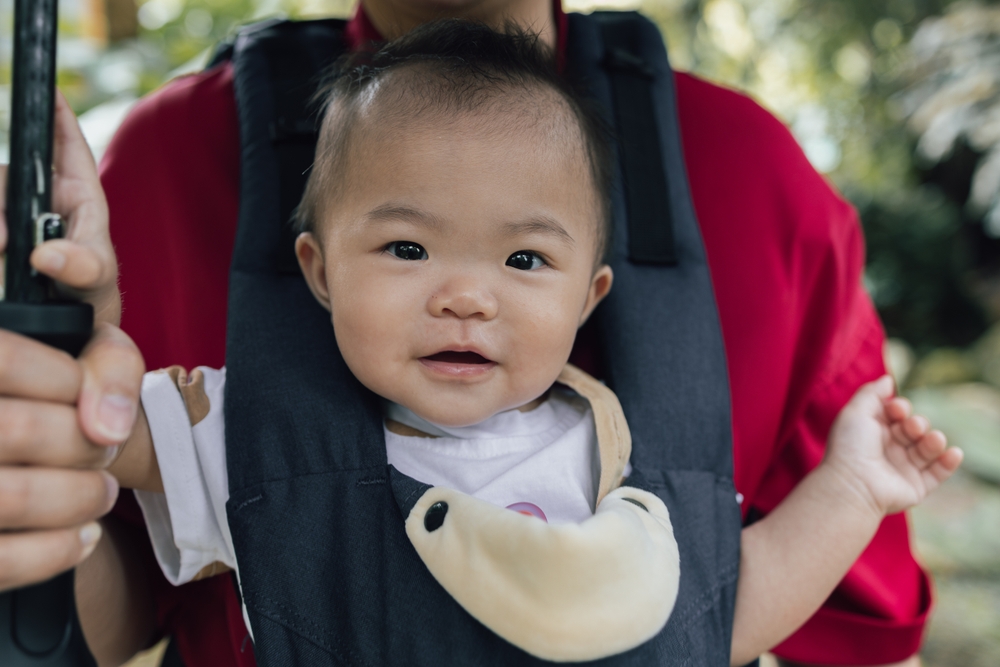 Before we get to the ranking, a quick word on what actually matters. Newborn suitability is the big one: some carriers need a bulky infant insert to be safe for a tiny baby, while others (like buckle carriers with an adjustable panel) are “newborn ready” straight out of the box. Then there’s hip-healthy positioning, which means baby’s thighs are supported from knee to knee in a natural “M” shape rather than dangling straight down, something the International Hip Dysplasia Institute specifically endorses in its approved product list. A wide, structured base panel is what delivers that positioning, so don’t be swayed by a carrier that looks lovely but has a narrow strip of fabric doing all the work. Finally, check the weight range (does it grow with your kiddo, or will you be shopping again by fourteen months?) and how easy the whole thing is to buckle up one-handed, ideally while your bub is already fussing to be picked up.
What Are the Best Baby Carriers & Slings UK in 2026?
Here’s our ranked shortlist, covering everything from newborn-specific slings to all-rounders that’ll take you well into toddlerhood.
| Rank | Model | Age/Weight Range | Price | Key Feature |
|---|---|---|---|---|
| 1 | Ergobaby Omni 360 Cool Air Mesh | Birth to toddler, 3.2kg to 20.4kg (7lb to 45lb) | £144.99 (RRP £164.90) | Four carry positions, breathable 3D air mesh, newborn ready with no extra insert |
| 2 | Ergobaby Embrace | Newborn to around 1 year, 3.2kg to 11.3kg | £89.00 (RRP £99.90) | Soft knit, cocoon-style newborn hold with hip-healthy positioning |
| 3 | BabyBjörn Baby Carrier One | Birth to toddler | Premium pricing, typically £110 to £150 depending on fabric | Three front positions plus a back carry, no insert needed |
| 4 | BabyBjörn Baby Carrier Mini | Newborn to around 1 year, 3.2kg to 11kg | Mid-range, typically £90 to £110 | Lightweight, super simple, ideal first carrier for tiny newborns |
| 5 | ClevaMama Hip Healthy Baby Carrier | 3.5kg to 15kg | Budget-friendly | IHDI-acknowledged hip-healthy design with five carrying positions |
| 6 | Kinderkraft Huggy Baby Carrier | Around 3 months to 20kg | Budget-friendly, typically under £65 | Very lightweight at 750g, adjustable width panel |
| 7 | Phil & Teds Parade Baby Carrier | From sitting unaided (roughly 6 months) up to 18kg | Around £99 | Compact frame backpack style, folds flat, includes a mini daypack |
| 8 | Baby Tula Explore Carrier | 3.2kg to 20.4kg | Premium, higher end of the market | IHDI hip-healthy certified, three carrying positions including back carry |
For the full range and current stock, it’s worth browsing Kiddies Kingdom’s baby carriers and slings category directly, as colourways and availability shift regularly.
How Do Our Picks Compare in Detail?
1. Ergobaby Omni 360 Cool Air Mesh: Best Overall
The Omni 360 is the carrier that tends to win “one carrier to do it all” conversations, and it’s easy to see why. It’s newborn ready straight out of the box (no infant insert faff), offers four carrying positions including forward-facing once your tot’s ready, and the 3D air mesh keeps you both cooler on warmer days. It’s not the cheapest option here, and the padded waistband is bulkier than some minimalist slings, but if you only want to buy one carrier for the whole journey, this is a strong contender.
2. Ergobaby Embrace: Best for Newborns
If your priority is those early cuddly weeks, the Embrace is built specifically for it. The soft knit fabric wraps snugly around a tiny newborn with proper head and neck support, and it keeps hip-healthy positioning front and centre. The trade-off is that it’s a newborn-to-one-year carrier rather than an all-stager, so you may outgrow it faster than the Omni 360. Still, for a carrier that’s genuinely gentle on a fresh-from-hospital baby, it’s hard to beat.
3. BabyBjörn Baby Carrier One: Best for Growing With Your Baby
BabyBjörn’s flagship carrier covers you from birth right through to toddler stage without needing an insert, and it offers three front-facing positions plus a back carry for when your little one wants to see the world over your shoulder. It sits at the premium end of pricing, and some parents find the shoulder straps less cushioned than Ergobaby’s, but the buckle system is famously quick to get on, which matters a lot at 3am.
4. BabyBjörn Baby Carrier Mini: Best Lightweight Newborn Carrier
Think of the Mini as the One’s simpler, lighter sibling. It’s designed specifically for the newborn to around one-year stage, with a soft, stretchy fabric that hugs a small baby without feeling like you’re wearing a rucksack. It doesn’t offer a back carry or the same flexibility as the bigger BabyBjörn, so you’ll likely need a second carrier once your tot hits toddlerhood, but as a first carrier for the fourth trimester it’s genuinely lovely.
5. ClevaMama Hip Healthy Baby Carrier: Best Budget Buy
Don’t assume budget-friendly means corner-cutting here. The ClevaMama carrier is acknowledged by the International Hip Dysplasia Institute for its hip-healthy “M” positioning, offers five carrying positions, and covers a decent weight range from 3.5kg. It’s not going to have the plush padding of the premium picks above, and reviewers note the straps can feel a touch less structured on longer wears, but for parents watching the budget without compromising on hip health, it’s a smart pick.
6. Kinderkraft Huggy Baby Carrier: Best Value All-Rounder
At under 750g, the Huggy is one of the lightest carriers on this list, and its Velcro-adjustable panel means it can flex to fit different body shapes reasonably well. It covers a wide age range, from around three months up to 20kg, making it a genuinely long-lasting buy for the price. It’s a simpler carrier than the buckle-heavy premium options, so don’t expect quite the same plush comfort on all-day wears, but as a value all-rounder it earns its spot.
7. Phil & Teds Parade Baby Carrier: Best for Toddler Adventures
This one’s a different beast entirely: a compact frame backpack rather than a soft structured carrier, designed for once your little one can sit unaided. It folds flat for the car boot, comes with a detachable mini daypack for snacks and nappies, and can carry a toddler up to 18kg, which is handy for longer walks or festival days out. It’s not suitable for newborns, so this is very much a “stage two” purchase rather than a first carrier.
8. Baby Tula Explore Carrier: Best Hip-Healthy Premium Pick
We’ve included the Tula Explore here because it’s consistently one of the most-recommended carriers by independent reviewers and comes IHDI hip-healthy certified across all three of its carrying positions, including a proper back carry. It’s currently not stocked by Kiddies Kingdom, so we can’t link you to it directly, but it’s worth knowing about if you’re comparing the wider market, particularly if the structured, buckle-carrier style suits you better than a wrap.
Carrier vs Sling: What’s the Difference?
“Carrier” and “sling” get used interchangeably by a lot of parents, but there’s a genuine difference worth knowing before you buy. A structured carrier, like most of the picks above, uses buckles, a padded waistband, and a shaped panel to distribute weight across your hips and shoulders. They’re generally quicker to get on and off and tend to suit longer wears comfortably. A sling, whether it’s a ring sling, a stretchy wrap, or a woven wrap, uses fabric alone, tied or looped into position. Slings can feel more adaptable for tiny newborns and are brilliant for quick popping-in-and-out, but they typically take more practice to get the hang of, and getting the positioning wrong is more of a risk if you rush it. Neither is objectively “better”; it genuinely comes down to how confident you feel tying fabric versus clicking a buckle.
What Newborn Safety Basics Actually Matter?
Whichever carrier you choose, the same safety basics apply. Baby should be close enough to kiss on the top of the head, their chin should never be tucked tightly to their chest (it can restrict breathing), and their hips and legs should be supported in that hip-healthy “M” shape rather than hanging straight down or dangling from the crotch alone. Look for carriers tested to the EN 13209-2 safety standard, which covers soft baby carriers sold in the UK and EU. The Lullaby Trust also publishes clear, practical guidance on safe babywearing that’s well worth a read before your first outing.
FAQs
 Are baby carriers safe for newborns?
Yes, provided you choose a carrier designed for newborn use (either newborn ready out of the box, or fitted with the correct insert) and you follow safe positioning: baby upright, chin off chest, hips supported in the “M” position. Always check the manufacturer’s minimum weight and age guidance before your first wear.
What’s hip-healthy positioning?
It means baby’s thighs are spread and supported from knee to knee, with their knees sitting higher than their bottom, rather than dangling straight down. This “M” shaped position is considered healthiest for developing hip joints, and it’s the standard the International Hip Dysplasia Institute checks for when it certifies a carrier.
Carrier vs pushchair for everyday use?
They solve different problems rather than competing directly. A carrier is brilliant for tight spaces, stairs, public transport, or a fussy baby who only settles when held, while a pushchair wins for long walks, storage, and giving your back a rest. Most families end up using both depending on the day.
How long can you use a baby carrier for?
Most structured carriers cover newborn through to around three or four years old, though comfort for both you and your growing tot tends to taper off well before the maximum weight limit. Many parents find the sweet spot for regular use is somewhere between birth and eighteen months.
Do I need a special newborn insert?
Some carriers, like the ClevaMama and Kinderkraft picks above, are designed to fit smaller babies without any extra insert once adjusted correctly. Others require a specific manufacturer insert for safe use under a certain weight, so always check the product listing rather than assuming.
Can partners share the same carrier?
Most modern buckle carriers are designed to be quickly adjustable between wearers of different builds, so yes, in most cases a carrier can be shared. It’s worth trying it on together in store or at home before committing, though, since comfort really does vary from person to person.
How Do You Choose the Right Baby Carrier?
There’s no single “best” baby carrier, only the one that fits your little one’s stage, your own comfort, and how you actually plan to use it day to day. If you want one carrier to do it all, the Ergobaby Omni 360 is a safe bet; if it’s those early newborn weeks you’re focused on, the Ergobaby Embrace or BabyBjörn Mini are worth a closer look; and if budget’s the priority, the ClevaMama and Kinderkraft options prove hip-healthy design doesn’t have to cost a fortune. Pop over to the full baby carriers and slings range at Kiddies Kingdom and find the one that gets your bub, and you, out the door with a bit less faff.
Sling
Similar to a wrap, a sling is a wide piece of fabric which is worn across your body and over one shoulder. There are various styles of slings; with or without adjustable rings, padded or unpadded. They fit loosely and allow air to flow so are ideal for the hotter months. However, if you suffer from any neck, shoulder or back pain then they are best avoided as the single strap can start to put undue pressure on one shoulder.
Rear Carriers
Some front facing carriers can also be used on your back. This is helpful if you have back issues as you are not carrying the weight on your front, forcing you to stoop and causing further pain. There are also a number of carrier backpacks on the market, which are similar to rucksacks. They are structured carriers which fasten securely around your shoulders and waist, and can be used even as your child grows bigger.